In a nutshell:
- Rents in Luxembourg are highgoing from €1,200-€1,400 for a studio to over €3,000 for a large flatThis is due to high salaries and strong demand for property.
- The country is divided into 5 main regions (Centre, South, East, West, North), each with its own characteristics in terms of price and access to employment areas.
- Popular districts in Luxembourg City include Bel Air and Limpertsberg for a residential setting, Bonnevoie for its dynamism, and Cloche d'Or and Kirchberg for their modernity.
- Special features of renting in Luxembourg : a high deposit (3 months' rent), fixed-term but cancellable contracts, restrictions on development, no council tax, and third-party insurance that is not compulsory but is recommended.
Table of contents
Are you moving to Luxembourg and looking for a flat or house to rent? Here's everything you need to know before starting your property search.
1. The price of a rental property in Luxembourg
Renting in the Grand Duchy can be quite expensive compared with other European countries. On average, you should expect to pay between €1,200 and over €3,000 a month, depending on the size of the property you want (see all rental prices in detail).
Rental rates are high for two reasons:
- Because salaries are higher in Luxembourg than elsewhere. This makes it easier for residents to pay high rents.
- Because property is particularly expensive to buy (flats in the city centre cost more than a million euros, so rents are particularly high)
- Demand for real estate is strong: there is more demand than available accommodation. Flats are let on the first visit. This competition is driving up prices.
Also, plan to pay a deposit equivalent to three times your rent. This can be expensive: if you're planning to move to Luxembourg soon, make sure you save in the months leading up to your move.
2. The property market and the different regions
As in all countries, the closer you are to the capital, the higher the property prices.
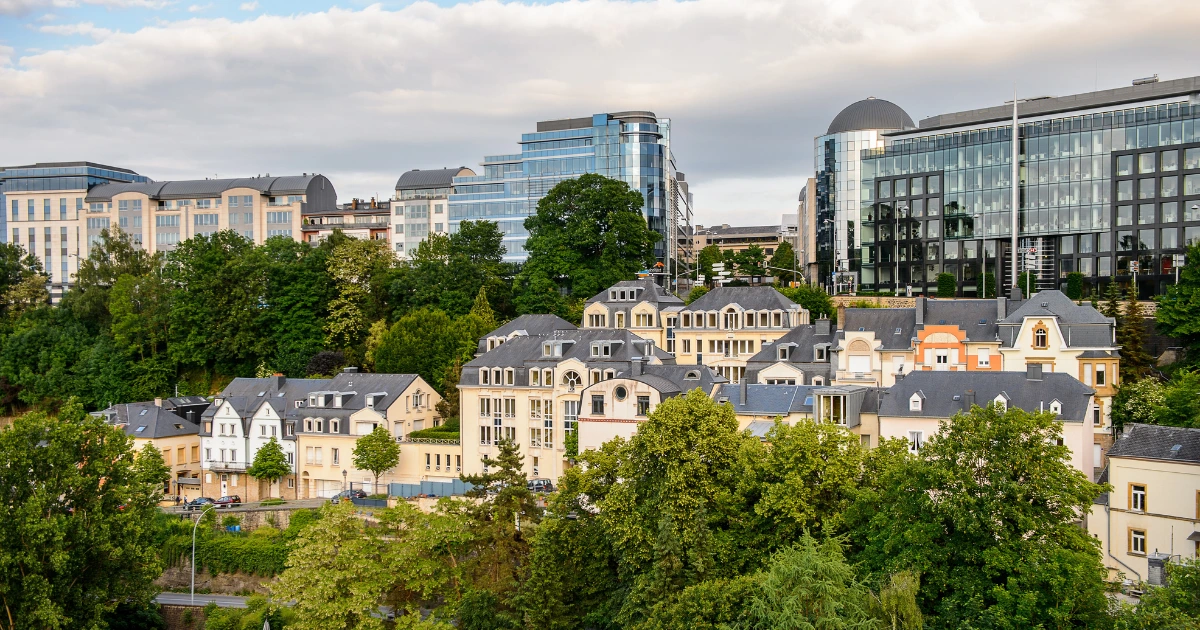
- The Centre This is the region around Luxembourg's capital. It is known as the most expensive region in Luxembourg. However, if you work in or around the capital, we advise you to look for accommodation here: you'll be 15 or 20 minutes from your place of work. You might even be able to get there on foot or by bike! You can look for accommodation in the various districts of Luxembourg, or in the surrounding municipalities (Strassen, Bertrange).
- The South : It is the second region in terms of economic activity. The Esch-sur-Alzette basin, close to the French border, has seen a boom in recent years, with very dynamic municipalities such as Differdange, Dudelange and Pétange. It's the ideal place if you're on a budget and want quick access to Belvaux, Belval or the Cloche d'Or district (Howald station).
- L'Est : This covers the entire area between the capital and the German border. This region has undergone rapid development as a result of road building. Prices have risen sharply in recent years. Access to the Kirchberg plateau and the airport is very easy if you live in the east.
- The West : is the region between Luxembourg and the Belgian border (Arlon). This is a strip of land between 10 and 15 kilometres long. This region is very well connected to the heart of the capital, which is why prices are quite high. Many new residents choose to settle in Arlon, on the Belgian side, where property prices are lower.
- Le Nord : This region, historically very rural, is in full development in Luxembourg. It is the largest region in the Grand Duchy. Motorway access between Luxembourg and Mersch has developed services and real estate in the north, but there is still a lot of space under development (particularly around Ettelbruck and Diekirch). This region will be accessible in terms of rent, but transport time will be high if you have to commute to the capital every day (allow between 45 minutes and 1 hour to get there by public transport).
If you're moving to Luxembourg for the first time, we advise you to choose a place that's not too far from your place of work. That way, you won't have to commute too far each day, and you can make the most of your free time to visit the Grand Duchy or go out in the evening! It's a luxury that's very much appreciated when you come from a big city with a lot of time spent on public transport.
3. Which district to choose in Luxembourg?
If you're looking to move to Luxembourg City, you'll quickly realise that there are a number of different neighbourhoods. Some are known for being residential, others are known for being dynamic.
Here's your guide to choosing the best area to live in Luxembourg.
Whatever neighbourhood you choose, remember that Luxembourg is a small city. All points can be reached in 15 to 20 minutes by public transport. Less, if you take your car or the OH electric bicycles made available by the municipality.
First and foremost, choose a flat that you like, in a location that's close enough to your work. After that, you'll be able to get used to your new surroundings and get to your favourite places easily!
4. The best-known property advertising platforms
In Luxembourg, there are a number of platforms you need to know about when looking for property:
All these property ad sites are free and make it easy for you to contact estate agents.
If you are actively looking for a property, we advise you to set up property alerts on these 3 platformsand to increase the number of requests for visits.
However, agents in Luxembourg are in very high demand: be persistent, don't give up, and you'll find the flat of your dreams!
A few tips if you want to rent a flat in Luxembourg quickly:
- Prepare a file with all the documents you need to rent a property (salary slips, proof of income, work contracts, identity papers) and send it to the estate agents before the visit, so that they can check that your profile is solid and put you at the top of the pile.
- Know exactly what type of property you are looking for: Do you prefer to live in a dynamic, lively neighbourhood? Or do you attach more importance to the quality of your flat and access to nature?
- Be ready to accept the flat immediately after (or even during) the visitto reduce the risk of it slipping through your fingers.
Home insurance, Energy, Banking, Internet...
See the Best Offers in 20265. Things you need to know when renting a flat in Luxembourg
Renting a property in Luxembourg has a number of special features compared with other border countries, such as France, Belgium and Germany:
The deposit can represent a significant amount: you will have to pay three times your rent when you sign your tenancy agreement. If your rental costs you €2,000 a month, that's €6,000 to pay into your landlord's bank account in one go. It's a good idea to know this in advance, so you can start saving before you move to Luxembourg. One good thing, however: agency fees must now be paid equally by the landlord and the tenant (previously, the tenant had to pay the whole amount).
The lease contract is for a fixed term which is negotiable: you will have to sign it for 2 or 3 years. However, you can terminate it at any time: the notice period is 3 months. The duration of the lease is designed to protect you from the landlord: the landlord will not be able to ask you to leave the flat before the end of the contract, except for serious reasons.
You won't be able to drill any holes in the walls: It's quite frustrating when you realise this when you arrive in Luxembourg. Here, most landlords forbid drilling holes in the walls to hang pictures, a shelf or a headboard. In Luxembourg, most landlords are investors, so they want to keep their flat in pristine condition for as long as possible. They have the right to ask you to call in a professional to fill in any holes, and this can be expensive.
There is no council tax in Luxembourg: The Grand Duchy imposes very few charges on property ownership or rental. Unlike France, where you have to pay several hundred euros a year, here you will pay a few dozen euros at most. Even so, this depends on the local authority and the taxes.
Civil liability is not compulsory when you take out home insurance. This is one of the special features here: you are not obliged to pay for third-party liability insurance. Nevertheless, we advise you to do so, otherwise you won't be protected for any damage you cause to others. What's more, you can deduct these costs from your tax bill. You can consult our comparison of the best home insurance policies to find the best contract.
Are you moving house soon?
Internet, Insurance, Mobile, Electricity...
FAQ: Frequently Asked Questions
What are the average rental prices in Luxembourg and why are they so high?
Rents in Luxembourg range from €1,200 to €1,600 for a studio near the capital, €1,600 to €2,800 for a 2-bedroom apartment, and over €3,000 for a 3-4-bedroom apartment. These high prices can be explained by high salaries, the high cost of buying property and strong demand in the face of limited supply.
What are the main rental regions in Luxembourg and what are their characteristics?
Luxembourg is divided into several zones: the Centre (more expensive, ideal for working in the capital), the South (dynamic and more affordable), the East (close to Kirchberg and the airport), the West (well connected but expensive) and the North (more affordable but remote).
What special features should I be aware of when renting a flat in Luxembourg?
The main features are: a 2-3 year lease with 3 months' notice, a deposit of 3 months' rent, restrictions on furnishings, and no council tax. A full rental file is required (payslips, employment contract, identity papers).